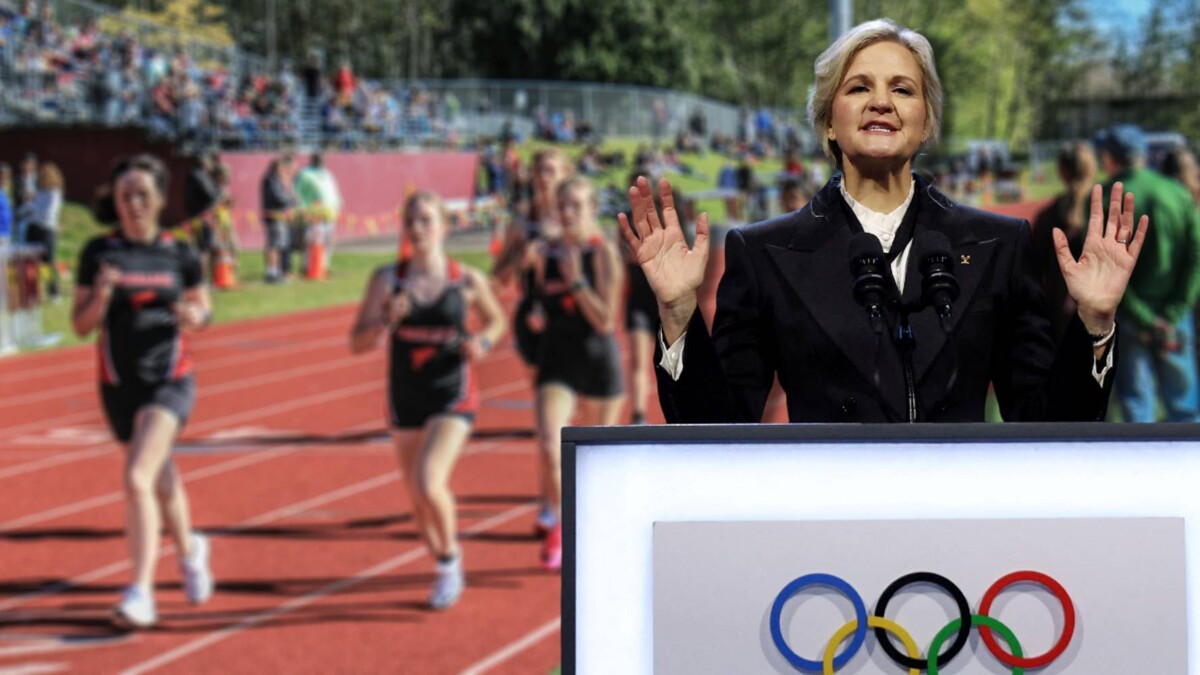
The International Olympic Committee (IOC) announced new measures that exclude transgender women from female events at the Olympic Games, which seek to align with the executive order of the President of the United States, Donald Trump, on sports, ahead of the 2028 Los Angeles Games. The head of state signed the executive order 'Keeping Men Out of Women's Sports' last February and promised to deny visas to some athletes who attempted to compete in the Olympic Games in Los Angeles. The order also threatened to 'withhold all funds' from organizations that allowed transgender athletes to participate in women's sports. Within months, the U.S. Olympic Committee updated its guidelines for national sports organizations citing an obligation to comply with the White House, to which the IOC has also joined. 'Eligibility for any female category event at the Olympic Games or at any other IOC event, including individual and team sports, is now limited to women,' stated the International Olympic Committee. Olympic Games: How will eligibility for female categories be determined? Eligibility for the female category will be determined in the first instance by a test to detect the SRY gene, only present in men, which must be negative. 'The IOC considers the presence of the SRY gene to be fixed throughout life and constitutes a highly accurate test that an athlete has undergone male sexual development,' noted the communication announcing the new rule, approved this Thursday in an Executive Committee session. 'Rare exceptions' such as athletes with a diagnosis of complete androgen insensitivity syndrome or other differences or disorders of sexual development that do not benefit from the anabolic or performance-enhancing effects of testosterone will be considered. Conversely, transgender athletes and athletes with androgen-sensitive disorders of sexual development will have to compete in male categories. The test to detect it, with a saliva or blood sample, is less intrusive compared to other possible methods and only needs to be done once in a lifetime, the IOC highlighted. 'The policy we have announced is based on science and has been developed by medical experts,' stated in the communication the president of the IOC, Kirsty Coventry, who added that it is unfair 'and in some sports not safe' for them to compete in the female category. Why were transgender women banned from the Olympic Games? The IOC document details that being male grants physical advantages that a group of experts believe are maintained throughout life. 'Males experience three significant peaks of testosterone: in the uterus, in the mini-puberty of childhood, and at the onset of adolescent puberty until adulthood,' the document stated. It added that this gives males 'individual performance-based sex advantages in sports and events that depend on strength, power and/or endurance'. 'At the Olympic Games, even the smallest margins can be the difference between victory and defeat,' said Coventry, a two-time Olympic gold medalist in swimming, in a statement. 'So it is absolutely clear that it would not be fair.' Nevertheless, mandatory gender control — already carried out by the governing bodies of athletics, skiing, and boxing — will likely be criticized by human rights experts and activist groups. When will the measure take effect? The IOC indicated that the eligibility policy that will be applied from the Olympic Games in Los Angeles in July 2028 'protects equity, safety, and integrity in the female category'. 'It is not retroactive and does not apply to any grassroots or recreational sports program,' clarified the IOC, whose Olympic Charter states that the right to practice sport is a human right. After its executive board meeting, the International Olympic Committee published a 10-page document that also restricts female athletes such as runner Caster Semenya, a two-time Olympic champion, with medical conditions known as differences of sexual development, or DSD. Coventry launched a review on 'the protection of the female category' as one of her priorities last June, upon becoming the first woman to lead the Olympic body in its 132-year history. Female eligibility was a prominent topic during last year's IOC election — held after an uproar over women's boxing in Paris — when Coventry's main rivals promised a tougher policy and took the lead on this issue. Before the Paris 2028 Olympic Games, three top-tier sports — athletics, swimming, and cycling — had already approved rules excluding transgender women who had gone through male puberty. It is unclear how many transgender women, if any, compete at the Olympic level. No woman who has transitioned competed in the Summer Olympic Games in Paris 2028, although weightlifter Laurel Hubbard did compete at the Tokyo 2021 Olympic Games without winning a medal.